Introduction
Chartered accountancy is the core of all business, be it big or small. A chartered accountant’s work involves auditing, taxation, accounting and financial planning. It can be a very challenging and rewarding job.
Career prospects after doing chartered accountancy are exciting. Chartered accountancy can be the first step to other rewarding careers in finance, investment consultancy and fund management.
The Chartered Accountancy course is conducted by the Institute of Chartered Accountants of India, which has its headquarters in New Delhi, 5 regional offices (Calcutta, Kanpur, Chennai, Mumbai and New Delhi) and 81 branches under these regional centres.
Step-by-Step
The qualifications for becoming a CA have changed over the years. Initially — and that was decades ago — one could think of becoming a CA only after finishing graduation and a candidate had to undergo five years of articleship training. In 1991-92, ICAI allowed candidates who had cleared their Plus Two examinations to appear for the Foundation Course of the CA programme. In October 2001, ICAI introduced PE-1 and PE-2 system of examinations in place of the Foundation and the Intermediate examinations. However, in 2006, ICAI revamped the system and launched CPT, IPCC and FC.
The unique feature of the chartered accountancy is its curriculum, which is theoretical education with complementary practical training. A student would undergo theoretical education and practical training concurrently from the very beginning. This balanced approach helps the students to appreciate the underlying practical applications of the theoretical education scheme.
Common Proficiency Test (CPT)
CPT is an entry level test of four subjects i.e. Accounting, Mercantile Laws, General Economics and Quantitative Aptitude.
Integrated Professional Competence Course (IPCC)
This is first stage of CA curriculum wherein only working knowledge of core and allied subjects to accountancy profession is covered. The subjects of IPCC are classified into two groups which a student can study and appear in the examination group-wise or both the groups together. IPCC is designed to improve knowledge of accountancy linked to accounting standards to build strong foundation for developing knowledge of financial reporting at the final stage. The students update their knowledge of business communication, business strategies, taxes, information technology and audit.
CA Final
CA Final covers advanced application knowledge of core subjects like financial reporting, strategic financial management, advanced management accounting, advanced auditing and professional ethics and information systems control and audit. In addition, principles of e-governance, corporate and allied laws, international taxation and VAT are important features of the updated subject contents.
Articleship
The students after passing Group I of IPCC will register for Articleship for a period of three years with experienced CAs. Certain rules do apply - CAs with 16 years of experience and above can take on about 8 articles, those with less experience can train fewer articles and these teachers or 'Principals' as they are called, can be changed during the course of training. An agreement of training needs to be executed before it begins. During the training time, articles learn the technical details of the work and as time passes, they are given larger assignments with less supervision. All articled clerks are paid a stipend depending on their city's population.
Start Early
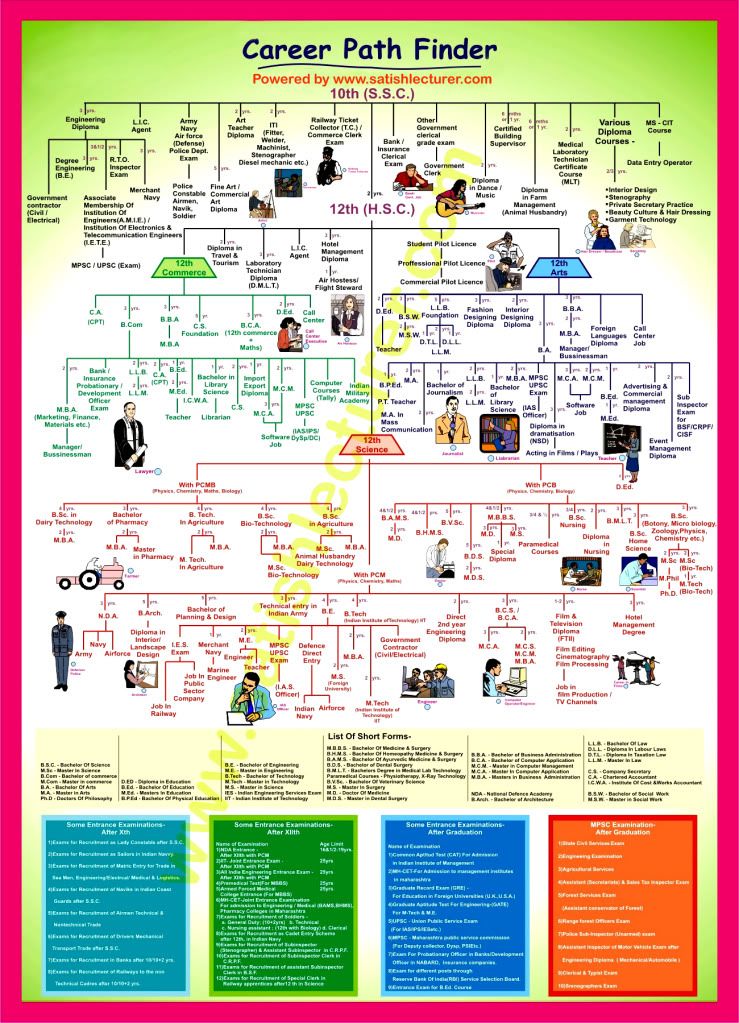
In today’s cut throat competitive world, it is advisable that a student starts planning right after class 10. For chartered accountancy, a student can register with the Board of Studies and prepare for entry level test while pursuing 10+2. It is better to take mathematics at this level. Students of commerce stream definitely have an advantage while pursuing this career. The latest scheme of CA is designed to encourage young talented students having aptitude for accounting education to make an early entry into the profession.
Is it the Right Career for Me?
It is generally believed that only students of commerce should pursue CA course. However, CA being a very practical course, the students from science and arts streams can equally benefit and make a successful career. Students of science and arts stream have to make extra efforts in order to understand some complex accounting nuances and have to get basic knowledge of various management topics. But it can be easily concluded that students of science and arts streams can be successful CAs, if they are ready to toil.
What would it Cost Me?
Unlike other professional courses, the fee for becoming a CA is very less, which is inclusive of the cost of study material. For registering with IPPC you have to shell out Rs 9000 while the fee for CPT is Rs 6700.
Funding/Scholarship
There is not much scope for any scholarships while pursuing chartered accountancy.
Job Prospects
On completion of the training, the candidates need to gain membership to the ICAI before they can start practicing as a CA. A member wishing to practice in India or abroad needs to obtain a Certificate of Practice from the ICAI, the yearly fee of which is Rs. 400. Once the membership is taken, the practicing member cannot work in any other business or occupation without taking permission from the council; they are only permitted to work in areas as specified in the CA regulations. More information on enrolment or the examinations can be requested from the Institute's offices or the Headquarters at Indraprastha, New Delhi or the Board of Studies, C1 - Sector 1, Noida - 201301.
Pay Packet
For CA Inter: Generally candidates holding CA inter-qualification are paid somewhere between Rs 7,500 and 15,000 depending on the type of firm. Payments can be higher for candidates possessing other qualifications such as MCom or an MBA. On the other hand starting salaries can be as little as Rs 4,500 to 5,000 in some small towns of the country.
For CA Final (FCA): Starting salaries range between Rs 12,000 to 30,000 depending on the type of firm and nature of the economy.
A full fledged CA can expect a salary between Rs 30,000 to 75,000 after serving a stint of more than 5 years at a top firm.
Demand and Supply
It can be easily concluded that the country needs about 7,500 to 10,000 fresh CAs every year seeing the growth of Indian economy in the last 5 years.
Market Watch
Chartered Accountants have been one of the most sought after professionals in India. Much of the reputation of CAs is due to the fact that their rigorous training (both theoretical and practical) makes them practically jack of all trades as far as the domain of finance is concerned. In spite of the sea change in global trade systems and practices, the requirement of CAs has remained steady.
The demand for CAs has been growing between 10% to 15% over the past 3 – 4 years. The demand however depends on the state of the economy and there is direct bearing on the demand of CAs when the economy is in downtrend. But the statutory clause for mandatory appointment of CAs provides substantial cushion support to the CA fraternity as compared to other comparable peers.
International Focus
The qualification of CA is globally recognized hence industry outlook for CAs is bright indeed. Much recognition for CA degree is due to the fact that the CA course has been able to keep pace with changes in industry scenario. Several new modules and topics have not only been incorporated into the CA course but have been very effectively implemented to give increasing more power to the CA degree. In spite of the fact that several top-notch B-schools (including IIMs) have produced some of the most brilliant B-school grads, it is noteworthy that CAs has been able to retain their prominence in present world order.
Positives/Negatives
+ves
The job is highly paying.
CAs command tremendous respect in the organisations and society.
-ves
It can be a stressful job as the responsibilities are enormous and there is no scope for any errors.
Regular update of knowledge is a must otherwise it may lead to stagnation in career.
Different Roles, Different Names
A Chartered Accountant’s work area has become so wide and involves so many activities that sometimes a CA is perceived as almost an enigma. A CA can start career with auditing activities, which is the basic work area of a CA. From here a more fulfilling career in finance can be pursed after getting enough exposure of intricacies of finance. As an investment consultant and as a fund manager a CA can play the role of a top decision maker. CAs also work in project management and consultancy services.
Top Companies/Verticals
Following are the areas where CAs find an opportunity:
Banks (Both private and public)
Public Limited Companies (mandatory for the purpose of law)
Auditing Firms (such as KPMG, Price Waterhouse, etc.)
Finance Companies, Mutual Funds, Portfolio Management Companies, Investment Houses, Stock Broking Firms
Legal firms, Legal houses, Patent Firms, attorneys, Trade Mark and Copyright Registers
Tips for Getting Hired
Accounting is a precision oriented job. Pay attention to how you dress, speak and conduct yourself in company. These also add a personal charisma which helps in maintaining good relations with peers and clients.
You need to understand the business world. It is also important that you show this understanding. Start looking at the bigger picture in terms of company numbers. This business acumen is a prerequisite for a CA.
Leadership and analytical skills are vital to a chartered accountant. Besides these, work on your communication skills both oral and written.
Be prepared to work long and hard when needed especially in the taxation months.
Maintain high ethical standards.
Introduction| Step-by-Step| Start Early| Funding/Scholarship| Is it the Right Career for Me?| What would it Cost Me?| Job Prospects| Pay Packet| Demand and Supply| Market Watch| International Focus| Positives/Negatives| Different Roles, Different Names| Top Companies/Verticals| Tips for Getting Hired